
You know, things are very interesting in Russia. We’ve always had very strong censorship, not only in Soviet times but before during the tsarist times, censorship was also quite strong. And Pushkin had his own personal censor, the tsar. The last twenty years are the only period of Russian history where there has been no censorship of literature. Yeltsin, who was a person of varied qualities, eliminated censorship even in the mass media.
I could not be more delighted by the news that PEN Translation Committee Member Burton Pike has been selected for the 2012 Helen and Kurt Wolff Prize, an annual prize awarded by the Goethe-Institut Chicago for an outstanding translation from the German. The prize, which has been around since 1996, comes with a hefty purse ($10,000) and a one-month residency at the beautiful Literarisches Colloquium Berlin. Pike is being honored for his translation of Gerhard Meier’s Toteninsel (Isle of the Dead), a classic of late-twentieth-century Swiss literature.
In Doug Liman’s documentary film Reckoning With Torture, ordinary Americans stand side-by-side with actors, writers, and former military interrogators and intelligence officers in a reading of official documents that reveals the scope and cost of America’s post-9/11 torture program.
This Sunday on Moyers & Company, Liman joinsLarry Siems, PEN American’s Director of Freedom to Write and International Programs, to discuss the film and the importance of hearing the voices of detainees.
To find out when the show airs in your area, click here.
The following is an excerpt from Daniel Stein, Interpreter by Ludmila Ulitskaya, translated from Russian by Arch Tait.
Check out Ludmila Ulitskaya’s reading of this work at Cooper Union, where she also discussed the current political and cultural situation of Russia and what that atmosphere means for writers today.
1. December 1985, Boston Ewa Manukyan
I always feel cold. Even in summer at the beach with the sun blazing down there is a coldness in my spine. I guess it’s because I was born in winter in a forest and spent the first months of my life in a sleeve of my mother’s winter coat. I was not expected to live, so if life is a gift for anyone, it truly is for me. I’m just not entirely sure it is a present I really wanted.
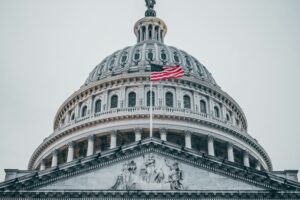
U.S. Supreme Court, photo by Matt H. Wade via WikiCommons
The Supreme Court announced today that it will consider whether plaintiffs represented by the ACLU—a list that includes PEN American Center, Amnesty International USA, Human Rights Watch, The Nation, and the Service Employees International Union Center—have the right to challenge the constitutionality of the FISA Amendments Act (FAA) of 2008, which authorizes the National Security Agency to conduct dragnet surveillance of Americans’ international emails and phone calls.
By way of background, we thought it would be helpful to repost this piece written in 2009 by Larry Siems, PEN’s Director of Freedom to Write and International Programs, explaining why PEN was going to court to challenge the secret surveillance program.
Why We’re Challenging the FAA
On Wednesday, July 22, PEN American Center joined the American Civil Liberties Union in court to challenge the FISA Amendments Act (FAA), which greatly expanded the ability of the U.S. government to spy on Americans without a warrant.
PEN is an 87-year-old organization that defends writers and the freedom to write around the world. We are plaintiffs in this lawsuit first and foremost because we believe our own communications, which include sensitive phone calls and emails with writers facing persecution in countries from Afghanistan to Zimbabwe, are vulnerable under the program.
When: May 21, 2012 Where: Goethe-Institut New York, Wyoming Building: 5 East 3rd Street, NYC What time: 7:30 p.m.
Free and open to the public.
Daniel Brunet received a PEN Translation Fund Award in 2010 to support his translation of Dea Loher’s play The Last Fire. He has continued to translate Loher’s work, and now is presenting a reading of his latest: Dea Loher’s Bluebeard—Hope of Women, which will be shown as a staged reading this Monday at the Goethe Institut’s event space in the East Village, the Wyoming Building.
Angela Veronica Wong’s how to survive a hotel fire
Once a week, the PEN Poetry Series publishes work by emerging and established writers from coast to coast. Subscribe to the Poetry Series mailing list and have poems delivered to your e-mail as soon as they are published (no spam, no news, just poems). We hope you like the pieces we find as much as we do, and pass them on.
This installment, selected by Ben Mirov, features poetry by Angela Veronica Wong, author of how to survive a hotel fire, forthcoming from Coconut Books (June, 2012).
When Elsa Is Angry She Forgets About Stairs
When Elsa is angry she forgets about
stairs, about spiders about veins and
blood about time about coronations
about drunkenness. About Switzerland.
When she is angry she can forget
about you except when I remember
why I am angry it is because of
you. New York is over. I mean Versailles
is over. The bra hook buries itself
in our backs. The boys who won’t love me just
won’t love me. I sit on the subway hold
my hand. You are not the only one who
goes home and thinks about killing yourself.
Elsa removes her pants in bed.
Elsa Can’t Tell The Difference Between
I want all the lines that cut your ass—
panties, electric tape, the welts from black
whippings. Elsa can’t tell the difference
between the chocolate stains and the period
stains on her sheets. She is so sad. Is it
a lack of iron or is it mourning?
Elsa, what is mourning and can it be
learned. Elsa, how we start to tear from
the middle. When I forget who I am
I put on pearls and spray my perfume. The
only narrative I have running through
my head is I need someone to kiss me.
Like boats shaped like birds set to the west, her
heart will never be rid of its ghosting.
Elsa Was Stabbed To Death She Had Her Key
Elsa was stabbed to death she had her key
in the front door her foot on the street.
Elsa’s back was to the street she had
headphones on the cabs went past. Elsa
listened to music her music was loud
her death was music. Her boyfriend was away he
went to Wisconsin he doesn’t exist.
There was no reason it happened she deserved
it she was pretty she doesn’t exist. She
felt maybe in her past life she was
beautiful she was great. She felt maybe
in her future life she’d think this life was
beautiful it was great. The building smelled like
cumin there is nothing left to say. Angela Veronica Wong is the author of the full-length poetry collection how to survive a hotel fire, forthcoming from Coconut Books in June 2012. She lives in Manhattan and on the internet at www.angelaveronicawong.com
Over a year has passed since Egypt’s initial uprising, but the country is still facing unstable times and an uncertain future. What is really happening inside the most populous country in the Arab world? How accurate is the American media’s portrayal of events as they unfold? Egyptian-born analyst and correspondent Mona Eltahawy, who spent a decade covering the Middle East as a journalist for Reuters and the U.K. Guardian, shares her expertise on the complexities of the Egyptian revolution.
Co-sponsored by The New School for Social Research
Welcome to new PEN Members Andre Bishop, Peter Canby, Mindy Friddle, Kristen Ghodsee, Morgan Harlow, Emma Gilbey Keller, Judith Matloff, Q.R. Quasar, and Christine Sneed!
Congratulations to the 2012 Best Translated Book Award winners: in poetry, Kiwao Nomura’s Spectacle & Pigsty (translated from the Japanese by PEN Member Forrest Gander and Kyoko Yoshida), and Wiesław Myśliwski’s Stone Upon Stone (translated from the Polish by Bill Johnston) for fiction! The winners were announced May 4 at McNally Jackson, in conjunction with PEN’s World Voices Festival.
A big thank you to our PEN Members who participated in this year’s World Voices Festival: Michael Cunningham, Jennifer Egan, Aleksandar Hemon, Yusef Komunyakaa, Tony Kushner, Eric Banks, Susan Bernofsky, Giannina Braschi, Maud Casey, Kathleen Cleaver, Lisa Dierbeck, E.L. Doctorow, Deborah Eisenberg, Danielle Evans, Edwin Frank, Cobina Gillitt, John Haskell, Philip Levine, David Levithan, Patricia McCormack, Claire Messud, Michael F. Moore , Victor Navasky, Mark Nowak, Katha Pollitt, Francine Prose, Victoria Redel, Laurie Sheck, and Jacob Weisberg!
Articles and Interviews
The April issue of Guernicafeatures an interview withPulitzer Prize–winner and PEN Member Nilo Cruz. Cruz discusses boleros, Cuban cabarets, the process of translating his own plays, and why he champions inflection over accent in theater. Also in Guernica, PEN Member Calvin Trillin talks about his start as a food writer: “I liked to eat, but I wasn’t thinking of it as leverage, I was thinking of it as sort of comic relief.”
“Some people may live lives that are perfectly linear, but mine seems to happen in intense, emotionally-charged spurts, followed by long, fallow periods of relative calm,” says PEN Member Lauren Groff in a recent interview on The Millions.
PEN Member Jane Smiley reveals what she really thinks of her Wikipedia entry in an interview for the LA Review of Books, and PEN Member Sara Paretsky talks to Mary Schmich of the Chicago Tribuneabout her unstoppable protagonist, detective V.I. Warshawski.
Reviews
“Flashily cerebral, laced with cool ironies, and…characters who are disdainful of convention, cliché, and boredom” is how Cornel Bonca characterizes PEN Member Don DeLillo’s latest book, The Angel Esmeralda: Nine Stories. It’sreviewed in the Los Angeles Review of Books.
Etgar Keret’s Suddenly A Knock on the Door (translated from the Hebrew by PEN Member Nathan Englander, Miriam Shlesinger, and Sondra Silverstein) is reviewed in the April issue of Words Without Borders. Keret’s new short stories include wish-granting goldfish, a woman who only calls out “Ari” during sex, and a son whose first question is always “What kind of animal are you?”
“He knew just how to get to you, and he was relentless in doing it,” Bill Clinton writes in his review of PEN Member Robert A. Caro’s biography The Passage of Power, in the NYT Sunday Book Review. This fourth installment of Caro’s Lyndon Johnson biography starts around the 1960 presidential election, focusing on how LBJ’s deft political maneuvering advanced civil rights and combated poverty.